

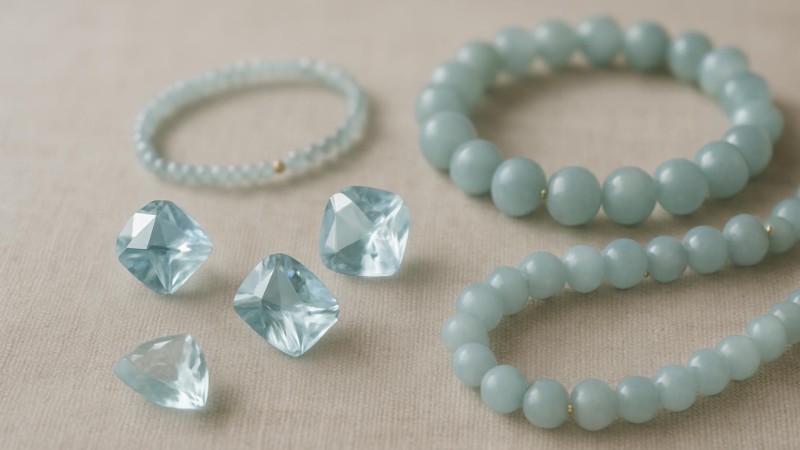
Introduction to Aquamarine
Aquamarine, the serene and sparkling birthstone for March, has long been cherished for its tranquil blue hues and its deep connection to the sea. Derived from the Latin words aqua meaning water and marina meaning of the sea, aquamarine perfectly captures the essence of ocean waters — clear, calm, and endlessly captivating. At PebbleBead, we adore aquamarine not only for its beauty but also for its versatility in jewellery design. Whether you are a gemstone enthusiast, a jewellery maker, or simply someone drawn to its soothing colour, this guide will help you understand aquamarine’s origins, traditional meanings, and how to use it in your own creations.
Origins and History
Aquamarine belongs to the beryl family, the same mineral group as emerald and morganite. Its colour ranges from pale sky blue to deep sea green, depending on trace amounts of iron within the crystal structure. The finest specimens often exhibit a pure blue tone with exceptional clarity, making them highly desirable among gem collectors and jewellery designers alike.
Historically, aquamarine was treasured by sailors who believed it could calm waves and ensure safe voyages across the seas. Ancient Romans used it as a token of friendship and love, while medieval healers valued it for its clarity and purity. Today, aquamarine continues to symbolise serenity, courage, and communication — traits that resonate with people seeking calm and confidence in modern life.
Where Aquamarine Is Found
Major sources of aquamarine include Brazil, Nigeria, Madagascar, Mozambique, and Pakistan. Brazil’s mines, particularly those in Minas Gerais, produce some of the most vivid blue aquamarines in the world. Other notable deposits are found in the Ural Mountains of Russia and the Karakorum region of Pakistan, where crystals often form in large, transparent hexagonal prisms.
For jewellery makers sourcing natural stones, the origin of aquamarine can influence both colour and clarity. Brazilian aquamarine is typically more saturated in tone, while African stones may display subtle greenish undertones. Regardless of source, aquamarine is prized for its transparency and durability, making it ideal for everyday jewellery.
Physical Characteristics of Aquamarine
On the Mohs scale of hardness, aquamarine ranks between 7.5 and 8, which makes it relatively resistant to scratches. Its vitreous lustre and transparency allow it to be cut into a variety of shapes, from classic ovals to modern geometric designs. Faceted aquamarine stones exhibit a brilliant sparkle, while cabochon cuts highlight the gem’s soft glow.
When working with aquamarine in handmade designs, it pairs beautifully with sterling silver, white gold, or rose gold settings. Jewellery designers often combine aquamarine with complementary materials like freshwater pearls or moonstone to create pieces that evoke the tranquility of ocean waves.
Aquamarine in Folklore and Symbolism
Throughout history, aquamarine has been surrounded by myths and legends. In ancient folklore, it was regarded as a treasure of mermaids, said to bring protection to sailors and ensure harmony among lovers. During the Middle Ages, people believed aquamarine could strengthen marriage bonds and foster honest communication between partners.
Traditionally, aquamarine was also associated with clarity of thought and emotional balance. Some cultures viewed it as a stone of courage, helping its wearer face challenges with calm and confidence. Today, many gemstone enthusiasts appreciate aquamarine for its symbolic connection to peace, serenity, and renewal — qualities that align beautifully with the arrival of spring in March.
How to Identify Genuine Aquamarine
Because aquamarine’s colour is subtle, it can sometimes be confused with other blue stones such as topaz or blue spinel. Authentic aquamarine tends to have a soft, slightly greenish-blue tone and excellent transparency. Natural inclusions, if present, are often minimal and may appear as faint, thread-like structures.
One reliable way to identify aquamarine is by examining its refractive index (1.57–1.58) and pleochroism, meaning it can display different shades of blue when viewed from different angles. Gemologists often use polarised light and magnification to confirm authenticity. For jewellery makers purchasing raw materials or amethyst beads alongside aquamarine, sourcing from reputable suppliers ensures the quality and genuineness of each stone.
Traditional Beliefs and Modern Appreciation
In traditional gemstone lore, aquamarine was believed to possess calming energies that aligned with the element of water. Ancient seafarers wore it as a talisman for safe travel, while healers used it as a symbol of purification and renewal. Although these beliefs stem from historical traditions rather than scientific evidence, they continue to add depth and narrative to aquamarine jewellery today.
Modern admirers value aquamarine not only for its beauty but also for its timeless elegance. It complements a wide range of skin tones and can be worn as both a statement piece and an everyday accessory. From delicate earrings to bold cocktail rings, aquamarine remains a versatile and meaningful choice for March-born individuals and gemstone enthusiasts alike.
Popular Aquamarine Jewellery Styles
1. Aquamarine Rings
Aquamarine rings are often designed to showcase the gem’s clarity and colour. Solitaire settings highlight its natural brilliance, while halo designs add extra sparkle with surrounding accent stones. For those crafting custom pieces, pairing aquamarine with smaller wire wrappers or faceted beads can create intricate and personalised designs.
2. Aquamarine Necklaces and Pendants
Aquamarine pendants look stunning in minimalist designs that allow the stone to take centre stage. Beaded necklaces combining aquamarine chips with jump rings and silver findings evoke a breezy, ocean-inspired aesthetic. Layered styles featuring mixed gemstones can also bring contrast and texture to a jewellery collection.
3. Aquamarine Earrings
Whether in drop, stud, or chandelier form, aquamarine earrings bring a touch of elegance and freshness. The gem’s light-reflective properties make it ideal for pieces that frame the face, catching subtle glimmers of blue in every movement. Combining aquamarine with other soft-hued stones like rose quartz or citrine can create harmonious, pastel-toned compositions.
4. Aquamarine Bracelets
Bracelets featuring aquamarine beads are popular for their understated beauty. Stretch bracelets with smooth round stones offer casual charm, while multi-strand designs with mixed gemstones add sophistication. Jewellery makers can experiment with textures by combining polished aquamarine with matte stones or metallic accents.
How to Care for Aquamarine Jewellery
To maintain aquamarine’s brilliance, clean it regularly using warm, soapy water and a soft cloth. Avoid ultrasonic cleaners if your piece contains other delicate gemstones or materials. Store aquamarine jewellery separately to prevent scratches, as harder stones can damage its surface.
Exposure to high heat or harsh chemicals may alter aquamarine’s colour, so remove your jewellery before swimming, cleaning, or applying lotions. With proper care, aquamarine pieces can retain their clarity and colour for generations, making them cherished heirlooms.
Tips for Designing with Aquamarine
For jewellery makers, aquamarine offers endless creative possibilities. Its soft blue tone pairs beautifully with silver, platinum, and white gold, but it can also create stunning contrasts with warmer metals like yellow gold or copper. When designing beaded pieces, consider combining aquamarine with natural textures such as coral, shell, or freshwater pearls to evoke an ocean-inspired theme.
Layering aquamarine with other gemstones can also produce unique visual effects. For instance, pairing it with darker stones like lapis lazuli or onyx creates a dramatic contrast, while lighter companions like clear quartz or moonstone emphasise its ethereal glow. In minimalist designs, a single aquamarine focal bead can serve as a striking centrepiece.
Why Aquamarine Makes a Perfect Gift
As the official birthstone of March, aquamarine makes a thoughtful and meaningful gift for birthdays, anniversaries, or milestones. Its association with calmness, clarity, and open communication makes it especially fitting for those beginning new chapters in life. In gemstone tradition, aquamarine is also considered the 19th wedding anniversary stone, symbolising enduring harmony and trust.
Gifting an aquamarine piece — whether a delicate pendant, a handcrafted bracelet, or a set of earrings — conveys heartfelt wishes for peace and happiness. For jewellery makers, it’s an opportunity to craft something deeply personal and symbolic, reflecting both craftsmanship and sentiment.
Conclusion: The Timeless Allure of Aquamarine
Aquamarine’s enduring charm lies in its delicate colour and tranquil energy. From ancient legends of the sea to modern jewellery design, this gemstone continues to inspire creativity and admiration. Whether you’re selecting a polished gemstone for a custom pendant or stringing a line of faceted beads, aquamarine offers both beauty and meaning in every form.
At PebbleBead, we celebrate aquamarine as more than just a birthstone — it’s a symbol of serenity, craftsmanship, and timeless style. Whether you’re a collector, designer, or admirer, let aquamarine’s oceanic hues remind you of the calm strength and clarity that lie within.

Leave a Comment