

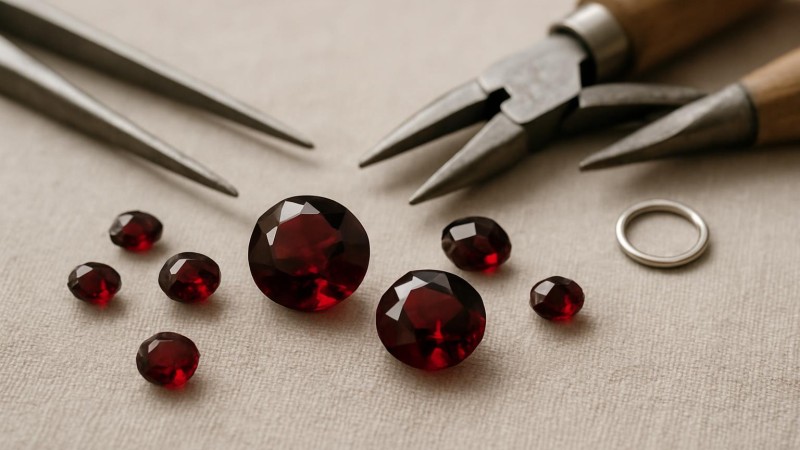
Introduction: The Fiery Gem of January
As the first month of the year dawns, January brings with it a gemstone that perfectly captures the warmth and vitality needed to face the winter chill — the garnet. Known for its deep red hue reminiscent of pomegranate seeds, garnet is a gem steeped in history, symbolism, and natural beauty. Whether you’re drawn to its rich colour, its symbolic meaning, or its timeless use in jewellery, understanding garnet’s origins and lore can deepen your appreciation for this classic stone.
What Is Garnet?
Garnet is not a single mineral but a group of silicate minerals that share a common crystal structure while differing in chemical composition. The most common variety is almandine, which exhibits the deep red tone most people associate with garnet. However, garnet also comes in a stunning range of colours — from green and orange to pink and even rare blues — making it a versatile choice for jewellery artisans and gemstone enthusiasts alike.
The Chemistry Behind the Colour
The name “garnet” originates from the Latin word granatum, meaning “pomegranate,” a fitting reference to the gem’s resemblance to the fruit’s vivid red seeds. The colour of garnet depends on its composition — for example, almandine and pyrope are red, spessartine often appears orange, and grossular can range from yellow to green. This diversity allows jewellers to create one-of-a-kind designs, whether using raw crystals or polished beads like amethyst beads to complement the garnet’s tones.
The Origins of Garnet: From Ancient History to Modern Discovery
Garnet has a storied history that spans thousands of years. Archaeological findings suggest that garnet was used as early as the Bronze Age, adorning both jewellery and ceremonial artefacts. The gem’s vibrant colour and durability made it highly prized among ancient civilizations, from Egypt to Rome.
Garnet in Ancient Egypt
In ancient Egypt, garnets were used in inlays, carvings, and jewellery for pharaohs and nobility. The Egyptians believed that the stone symbolised life and regeneration, often placing it in burial chambers to protect the deceased in the afterlife.
Garnet in Ancient Rome and the Middle Ages
Roman signet rings frequently featured garnet, valued not only for its beauty but for its ability to leave a sharp impression in wax seals. During the Middle Ages, garnet was worn by clergy and warriors alike, as it was traditionally believed to bring courage, faith, and protection. In folklore, travellers carried garnets to light their way through the dark — a poetic reflection of the gem’s inner fire.
Where Garnet Is Found Today
Today, garnet is mined in various parts of the world, each location producing unique varieties. Some of the most notable sources include:
- India: Known for its rich red almandine garnets.
- Africa: Tanzania and Namibia produce brilliant orange spessartine and green tsavorite garnets.
- Sri Lanka: Home to a rainbow of garnet colours, including rare purplish and pinkish stones.
- Russia: The Ural Mountains yield deep red pyrope garnets with exceptional clarity.
The global availability of garnet makes it an accessible yet luxurious choice for jewellery designers and collectors alike. When combined with complementary stones or findings like jump rings, it transforms into a statement of elegance and craftsmanship.
The Symbolism and Meaning of Garnet
Throughout history, garnet has been associated with passion, protection, and vitality. As January’s birthstone, it embodies the themes of new beginnings and enduring strength — qualities that align beautifully with the spirit of the new year.
Symbol of Love and Friendship
In folklore, garnet was often regarded as a symbol of deep affection and lasting friendship. Ancient travellers exchanged garnet jewellery as tokens of safe return, believing that the gem’s brilliance would guide and protect them. In modern symbolism, garnet continues to represent commitment, trust, and heartfelt connection — making it a meaningful gift for loved ones born in January or celebrating milestones.
Energy and Passion
Traditionally, garnet has been associated with the element of fire, symbolising energy, creativity, and passion. In historical belief systems, wearing garnet was thought to inspire motivation and confidence, making it a favoured talisman for artists and leaders. This fiery symbolism is echoed in the gem’s deep red glow, a visual reminder of inner strength and drive.
Garnet in Jewellery Design
Garnet’s timeless appeal makes it a staple in both classic and contemporary jewellery. Its durability — ranking between 6.5 and 7.5 on the Mohs hardness scale — ensures that it can withstand daily wear while maintaining its lustre. Whether set in silver, gold, or brass, garnet pairs beautifully with other natural stones and materials.
Popular Garnet Jewellery Styles
- Birthstone Jewellery: Rings, necklaces, and bracelets designed for January birthdays.
- Vintage-Inspired Designs: Victorian and Art Deco pieces often feature garnet accents.
- Modern Minimalism: Simple garnet studs or pendants that highlight the stone’s natural colour.
- Bohemian Creations: Handmade pieces with mixed materials like wire wrappers and textured metals.
For jewellery makers, garnet beads and cabochons offer endless creative possibilities. Combining garnet with complementary tones — such as the soft iridescence of freshwater pearls — can create elegant contrasts that highlight the gem’s depth and warmth.
Traditional Beliefs and Folklore
In traditional belief systems, garnet was often associated with protection and illumination. Sailors and travellers in medieval Europe carried garnets as charms against danger, while in Eastern traditions, it symbolised enlightenment and the power of transformation. These beliefs reflect humanity’s long-standing fascination with the gemstone’s vibrant inner fire.
Folkloric Associations
- In ancient folklore, garnet was said to protect its wearer from nightmares and misfortune.
- It was believed to symbolise the heart, passion, and devotion in relationships.
- Some traditions held that garnet could bring clarity and balance to emotional energy.
While these associations are rooted in cultural and historical traditions rather than science, they continue to influence how people connect with the gem today.
How to Care for Garnet Jewellery
Proper care ensures that your garnet jewellery retains its brilliance for generations. Though durable, garnet should be treated with care to avoid scratches and damage.
- Clean garnet jewellery with warm soapy water and a soft brush.
- Avoid harsh chemicals or ultrasonic cleaners, especially for jewellery containing multiple stones.
- Store garnet pieces separately from harder gems to prevent abrasion.
- Regularly check clasps and settings to ensure your stones remain secure.
With these simple steps, your garnet jewellery will continue to radiate its signature glow year after year.
Choosing Garnet for Your Collection
When selecting garnet jewellery or loose stones, consider the colour, clarity, and cut. Deep, even coloration with minimal inclusions typically indicates higher quality. However, personal preference plays a major role — some collectors favour unique tones or inclusions that add character to their pieces.
Designers often pair garnet with metals that enhance its warmth — yellow gold brings out its fiery undertones, while sterling silver creates a striking contrast. For a personalised touch, combine garnet with beads or findings that complement your design vision. Whether crafting a simple pendant or an intricate layered necklace, the possibilities are endless with PebbleBead’s selection of gemstones and jewellery-making supplies.
Conclusion: Garnet’s Enduring Allure
Garnet’s story is one of transformation, passion, and timeless beauty. From ancient Egyptian tombs to modern jewellery studios, it has captured the human imagination for millennia. As January’s birthstone, it symbolises renewal and vitality — the perfect gem to start a new year with purpose and warmth.
Whether you wear garnet for its rich history, its symbolic meaning, or simply its captivating colour, this gemstone continues to inspire and enchant. Explore the world of garnet through your own creations — and let its fiery brilliance illuminate your jewellery-making journey.
For the complete picture, read our in-depth guide:

Leave a Comment